Thursday, November 4, 2021

One-On_One


One-On-One


When the kids in my neighborhood were growing up, we shot a lot of hoops on driveway courts. My friend Barbara was a natural. Tall and talented, she reigned on the court. Often we’d play five against one — we five all failing to get past one Barbara. We’d stake out sections of the court while Barbara covered the whole court on her own. 

Gracious in victory (and she always won), Barbara spent many hours helping us hone our skills. Tirelessly, she worked one-on-one teaching each of us the skills needed to play well. I could have played in a million games and never gotten any better, but with Barbara’s tutoring, I learned how to set my feet, aim, and shoot at the target. Barbara cheered my small improvements and helped me make adjustments with focused suggestions and demonstrations. 

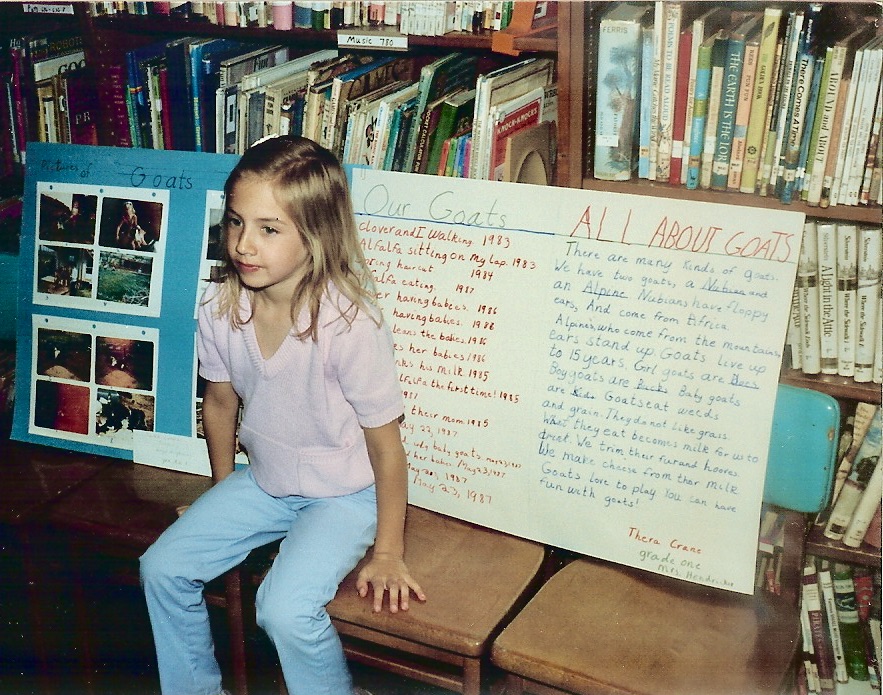
One of my greatest teaching challenges with primary students was teaching them to write informational reports. After some frustrating years trying to work with the whole class, I began to sit with small groups and work one-on-one with each student. Guiding and encouraging them individually made each a better writer.

One-on-one tutoring, in basketball or writing, is, as Ulrich Boser in his book Learn Better writes: “the most effective form of instruction ever known…. When people get one-on-one attention, they get a lot of feedback. It’s also easier to motivate students — tutors know what things someone finds meaningful… tutoring is tailored to a student’s level of knowledge. It’s highly focused.” Barbara helped me focus on my individual weaknesses. With my students, I knew who needed help with locating information and who needed help with forming sentences. 

To effectively develop skills, students must value the skill (making a basket or conveying information effectively), focus on particular skills (shooting stance or writing complete sentences), get and react to feedback (make or miss the basket, listen to the coach’s instructions, edit and revise), and practice in a structured way (take several shots from one position on the court or follow a report outline). 

Parents have an advantage when working with their own children. As controversial as homework is, its value often lies in the one-on-one time parents spend working with a child. Who knows a child better than a parent? Children whose parents encourage and guide them one-on-one learn more. Children focus on and improve skills when parents encourage and help them work through areas of need.  

A parent reading with a child on a lap shares more than letters and sounds. Cuddled in the warmth of an embrace, children learn to love both the experience of sharing books and the skills needed for reading them. 

Working one-on-one with Barbara, I became a better basketball player. Barbara became a great coach. Be a great coach for your children. One-on-one, help them hit the target of learning.


(For more information: Learn Better: Mastering the Skills for Success in Life, Business, and School, or, How to Become an Expert in Just About Anything by Ulrich Boser)


Saturday, October 16, 2021

Tell Me Why


Tell Me Why


If a two-year-old’s favorite word is “No,” a three-year-old’s is surely “Why?” Put your shoes on. Why? Eat your broccoli. Why? Let’s go to Grandma’s. Why? Toddlers have limited knowledge of the world but they have a great curiosity to know more. People who want to expand their knowledge never stop asking, “Why?” 

Ben Franklin lived for eighty-four years as a three-year-old. He never stopped asking, “Why?” Having only about two years of formal schooling before his father set him up in an apprenticeship, the tediousness of his tasks could have squashed his desire to learn but Ben used it as an opportunity. He became a vegetarian so that he could save on the cost of meat. With the money he saved, he bought books.

Reading books wasn’t enough for the teenage Ben; he wanted to master the ideas within. So, after reading a passage, he put the book away and tried to write out as much as he could remember. A few days later, he’d again recall what he had read. As he gained more knowledge, he summarized the main ideas and made connections to other information. He mastered an idea and added to his understanding always asking, “Why?” 

We all know how Ben fared with his learning process. Writer, printer, political philosopher, politician, postmaster, scientist, inventor, humorist, statesman, and diplomat, Ben’s thirst for knowledge served him well. How can we, like Ben, remain curious about learning? Continue to ask why — and how and when and where and who and what. Extend your learning by remaining curious.

We like to think that experts have all the answers in whatever field they pursue, but true experts continue to gather and sift knowledge to extend learning. Examine the work of any great artist or musician. Note how they developed and extended their skills over time. Ulrich Boser, in his book, Learn Better, writes, “Learning — especially richer forms of learning — is a type of knowledge extension, a matter of expanding an area of expertise…” Who would want a surgeon who only knew what he learned in medical school? Learning is an ongoing and enriching process. 

Extended learning goes beyond gathering knowledge. A perpetual learner gathers information, summarizes what is learned in meaningful and memorable terms, makes connections to other ideas and personal experience, applies it in concrete experience, revises conclusions, shares it with others, argues about it with other experts, and repeats the whole process continually. Boser defines learning as “a form of doing.” We don’t “get” learning, we “do” learning. A true learner asks questions and seeks answers over and over again to expand and enrich his/her life.

Ben Franklin never stopped learning. At age 81, he, a former Royalist, signed the American Constitution. At 83, he, a former slave owner, advocated for the abolition of slavery. Ben’s curiosity enriched his life and ours.  Remain curious. Do learning. Enjoy life. Ask, “Why?”


(For more information, read Learn Better: Mastering the Skills for Success in Life, Business, and School, or, How to Become an Expert in Just About Anything by Ulrich Boser.)


Friday, October 1, 2021

Do You Relate?


Do you relate?


When standardized testing became mandatory, teachers were asked to teach a new way of thinking about math. Students needed to understand a problem, describe their thought processes, make a plan for solving the problem, find a solution, and prove that their solution was correct. A pretty high standard for any graduate student. It’s even harder when you are eight years old.

Most of us grew up learning “how” to get an answer not “why” we got it. Ask any first-grader what two plus three equals and he will confidently answer “five.” Ask how he got the answer and many will answer, “I just know it.” That was where many teachers were too. Drilling and practicing solving equations had left us with an automatic ability to solve problems that did not require reflection or proof.

Teachers, wonderful and brilliant people who always want their students to succeed, rose to the challenge and helped their students get a better understanding of math. With time and effort, students learned to critically examine a problem, plan for a solution, explain what they did and why they did it, and support their answers with proof gaining a better understanding of the “why’s" behind math. 

Taking these procedures back to second grade means that now, instead of answering, “I just know,” the student’s thought process might go like this: “I understand that three and two are quantities which I can represent with objects. The plus sign means to combine quantities. I plan to combine (add) the two quantities. I make one pile of two and one pile of three and I put them together. When I count the combined group, I prove that two plus three equals five”  

The processes of understanding, planning, and proving are somewhat overwhelming for young students (and their parents) but the outcome is worth the effort. Thinking through solutions helps students relate to other areas of problem-solving. As Ulrich Boser writes in his book, Learn Better, students begin to see “how [learning] all fits together… we don’t want to know just a single detail or procedure — we want to know how that detail or procedure interacts with other details and procedures. In short, we want to understand the underlying system” so that we can apply what we learn to other questions and solutions. Understanding how to add quantities helps students apply that understanding to other areas of math.

These processes can be adapted to any area of learning. Questioning, mapping, making connections, reflecting, comparing, and reviewing improve any kind of learning. Students learn a better way to learn. The process of learning and reflection leads to greater understanding. Understanding in one area leads to understanding in others. 

Changing the way we think about learning is difficult; it is easy to rest on the “way we always did it.” Teachers and students know better. Hard work leads to better understanding. Better understanding leads to success. Success leads to more learning — from first grade to graduate school and beyond.


(For more information, read Learn Better: Mastering the Skills for Success in Life, Business, and School, or, How to Become an Expert in Just About Anything by Ulrich Boser.)


Friday, September 17, 2021

Develop a Feedback Loop


Develop a Feedback Loop


One of the most difficult assignments during my student teaching was to video myself teaching a lesson. Planning the lesson, gathering the materials, and recording went smoothly. I was comfortable teaching the lesson. Watching the video afterward was brutal.

Did I always sound that frightened? Did my hair really look like that? Why did I wear that dress? After getting past these (and it took some doing), I had to complete my assignment: Critique my teaching practices, and then, most harrowing of all, show the video to my college class and listen to their analysis. Let them be kind, I prayed.

Ulrich Böser, in his book Learn Better, writes that after we develop our skills and knowledge in the learning process the next step is to “enter ourselves into a feedback loop, to hone our skills in a structured sort of way,” to evaluate our learning using a dedicated and focused system of monitoring and criticizing our progress. We must rewind our learning and review our skills to judge our failures and successes.

Self-evaluation and self-quizzing (asking yourself questions during and after learning) set the baselines for relearning. What do I know well? What did I forget or misunderstand? Keeping a record of hits and misses identifies needed skills and builds on already acquired skills. Self-monitoring raises our awareness of the areas we need to improve. 

I asked myself: Did I engage the students? Did I use materials effectively? Which information did I stress or miss? Did I know the material well enough to answer student questions? Did I look at students more often than my notes? I noted strengths and weaknesses and proposed adjustments for future lessons.

Next, my classmates watched the video and offered feedback: Move among the students more. Use visual aids more often. Involve the students in an activity. My classmates offered productive and kind feedback — after all, I would be critiquing their videos too. 

My supervisor was more direct. His feedback involved a list of questions to answer after I again reviewed the video and some general suggestions for improving instruction. As Boser notes “good feedback doesn’t tell people what exactly to do… Helpful feedback provides guidance. It gives us a way to direct our development.” My teacher didn’t tell me to pull down a map; he asked me how I might help my students visualize the position of a nation in relation to our own. 

All this was exhausting, but my learning wasn’t over yet. I had to include corrections in my lessons and record and review two more lessons during my teaching assignment. This repetitive and sometimes painful process made me a better teacher.

Self-quizzing, monitoring, reviewing, and evaluating are powerful learning tools. Another effective way to learn is to teach others. My classmates and I improved our skills by teaching each other to teach.

Develop a feedback loop of your own. Mentally record your performance. Review and evaluate as you learn. Ask yourself questions. Discuss what you have learned with a friend. Develop the loops which will make you a better learner.  


(For more information, read Learn Better: Mastering the Skills for Success in Life, Business, and School, or, How to Become an Expert in Just About Anything by Ulrich Boser.)


Monday, September 6, 2021

Making Meaning


Making Meaning


When I started teaching, I sometimes substituted at a vocational school. I didn’t know much about brick-laying, small engine repair, or computer technology but I muddled through. One class was geometry, which had been one of my worst subjects in high school. I struggled to stay ahead of the students. One day, a frustrated student looked up from his work and asked, “Why do we have to learn this anyway?” A surprising question from a student whose future would include designing and building structures and systems.


Students have always asked this question. I can imagine Aristotle clapping his hand to his forehead as a young Greek moaned, “Why are we doing all this arguing? Can’t you just tell us the answers?” Students must find meaning before they can learn.


In his book, Learn Better, Ulrich Boser writes, “Motivation is the first step in acquiring any sort of skill. It’s hard to learn something if we don’t see any meaning in it… value drives motivation.” To learn a new skill, one must see value in learning it.

What is your motivation for learning a new skill? A better salary, becoming more efficient, advancement, gaining enjoyment, improving a skill, learning a new skill, or beating an opponent? Systems analysts learn new computer skills to debug programs while video game players learn them to conquer virtual worlds.  


Children may look at learning as something they have to do based on expectations set down by parents and teachers. Again, “Why do we have to do this?” Motivation is not always intrinsic. Think about potty training. What toddler wants to give up the waste-management services rendered by loving parents? Children must understand how life will be better when a skill is learned.  


Boser writes, “When it comes to learning, meaning isn’t something that finds us. It’s something that we need to uncover on our own.” My frustrated student didn’t connect geometry to calculating the slope of a roof, designing the shape of a room, or estimating the number of bricks needed for a structure. Perhaps geometry would become meaningful for him when his first structure collapses under the weight of snow or when he runs short of bricks for a wall. 


Parents and teachers can help children find meaning in learning. Aim learning toward practical applications. Tell time so you know when recess is. Count money so you can buy something at the store. Practice the song for the big show. Read so you can find information on your own or enter new worlds. Use math to build a doghouse or share out cookies. Children enjoy learning a skill if it is part of a game or project. 


Help your children find meaning in learning. Demonstrate the value you derive from your learning. Show how learning pays off in accomplishment or enjoyment. Share the joys and purposes of learning so that your children can discover their own. Start now before the roof caves in.


(For more information, read Learn Better: Mastering the Skills for Success in Life, Business, and School, or, How to Become an Expert in Just About Anything by Ulrich Boser.)


Wednesday, August 18, 2021

Pause


Pause


My little neighbor and I have many interesting conversations. He is six and I am, let’s just say, older. His first language is not English but he is completely fluent with a cute little accent. My only language is English (with a cute local accent) and with my aging ears, our conversations go something like this: 


Me:  Good morning, how are you?

Him: What?

Me: How are you?

Him: I am fine. Where are you going?

Me: What?

Him: Where are you going?

Me: I’m taking a walk in the fields.

Him: What?


And so on. We “what?” back and forth cheerfully and somehow manage to have lovely conversations. Connecting the dots between “whats,” we understand one another better. 

Conversations like these are not unfamiliar to me. I taught little ones for twenty-five years. Ninety-percent of my announcements were met with “What?” No matter how clearly I laid out directions, speaking them, demonstrating them, repeating them, writing them on the board, and having students repeat them back to me, as soon as I said, “Ready?” hands would shoot up. “What are we supposed to do again?"

For every one sentence I uttered, at least five “whats” were returned. Repeating myself became second nature (a habit that comes in handy with friends who also have aging ears).

Over the years, my students remained seven or eight but I aged ever upward. In my later teaching years, I was the one asking for repeats. The little ones repeated without complaint (teaching me a lesson about patience and listening). One student in particular stands out, a little sweetie who had a unique way of asking to hear it once again.

During the first week of school, we were sharing a story at the reading carpet. I galloped along at my usual reading speed when she raised her hand. I called on her and she politely said, “Pause.” 

At first I was confused. I asked her to repeat. She said, “Pause, please.” I thought, This little one has an intimate relationship with her remote control. Then, I paused. In fact, we all did. Every kid’s attention focused. After a second, I repeated slowly what I had been reading. She nodded and we read on. This became a habit. Pause. Slow repeat. Continue.

After a while, the whole class fell into the habit of asking for a pause. Too much noise? Pause. Too much information? Pause. Too many clamoring for attention? Pause. I loved “pause” and so did my students. With every pause, we connected with one another.


We live in a chaotic world. Battered day and night by news, opinions, events, activities, requests, information, and emotions, we long for a pause, a moment of quiet, a moment of peace, a moment to repeat, recall, regroup, and re-energize. A remote control with a pause button powerful enough to slow the world down just for a few moments would be most welcome. A pause just long enough to listen to one another, understand one another, to stop, rewind, and continue at a slower more manageable pace. 

My little neighbor and I will continue to “what?” one another when we meet. Slowing down our conversation for repeats, we understand each other better. Pause, repeat, understand, connect. 


Thursday, August 5, 2021

The Praise Maze

The Praise Maze


J.D. walked into his kindergarten interview with a smile on his face. The teacher asked him to count as high as he could. J.D. looked at her and asked, “If I do, will I get a sticker?” The interview continued with the teacher asking questions and J.D. asking for stickers. After the interview, J.D’s parents admitted that they gave J.D. a lot of praise and stickers. Now he expected them for every accomplishment from brushing his teeth in the morning to getting into bed at night.

It is natural for parents to praise their children. But research shows that too much praise — and the kind of praise given— can have deleterious effects. Children who are overpraised may shut down when something requires extra effort. Praising a child’s good looks, intelligence, or strength can cause them to overrate their innate abilities and underrate the importance of effort.

Imagine that almost everything you do in a day is new to you. Pretty daunting. That’s the world kids enter every day. Children must learn thousands of new skills just to navigate at home — add daycare, preschool, teams, clubs, and any one of a hundred places they visit with their parents and the effort is overwhelming. Children need confidence to attempt these many challenges. Parents’ and teachers' encouragement keeps them trying. 

Encouragement focuses on effort and persistence. Praise focuses on accomplishment. Saying to a child, “You are so smart,” is different from encouraging them by saying, “I like the way you worked your way through that problem.” Dr. Carol Dweck, working with her team at Columbia University, discovered that the wrong kind of praise, that which emphasizes accomplishment over effort, can have a negative effect: “Emphasizing effort gives a child a variable they can control. They come to see themselves as in control of their success. Emphasizing natural [ability] takes it out of the child’s control, and it provides no good recipe for responding to failure.” When over-praised children, those who have been told that they are succeeding due to an innate quality (intelligence, strength, beauty, talent, etc.) encounter failure, they are more likely to shut-down believing that the task is beyond their ability. Dweck calls this the “inverse power of praise.” Children who think that the key to success is innate are less likely to put much effort into a task that does not come easily to them.  

Persistence and effort should be encouraged. In one study, children who had been taught that intelligence can be developed improved their study habits and skills regardless of their natural abilities. Being taught that the brain is a muscle that can be  strengthened with use, like any other muscle, gives students the confidence to attempt difficult tasks.

The best kind of encouragement targets specific actions children can take to get good results: I like the way you organized your work. You worked hard on these problems. I can see the revisions you made to make this a better paragraph. You shared so nicely. Your cartwheel improved with practice. You’ve made great progress with ….  Children learn that success comes through hard, focused work. 


Clear focused encouragement coming from a loving parent or a dedicated teacher lasts longer than any sticker. Give it a try. I know you, and they, can do it. 


(Quotations found in “The Praise Paradox: Are We Smothering Kids in Kind Words?” by Po Bronson and Ashley Merryman NEAToday, 2011)